



 0883.656676
Reasons for a partnership between Miami and Margherita di Savoia
Margherita di Savoia is a quaint, small beach town situated in one of the most beautiful southern Italian regions, called Puglia. Its endless beaches(18 km in total) very wide and covered by powdery, white sands, as well as the pristine water make the little town one of the most popular tourist spots in Italy. Margherita di Savoia is quite simply a paradise for all those who love the good life.
This small town located on the southernmost part of the Adriatic Coast offers splendid bathing with thermal baths and natural beauty. It is home to the largest Saltpan in Europe, a wetland of international significance and a National Nature Reserve since 1977. The Saltpan, that covers an area of some 4500 hectares, symbolises the town and has provided its primary economic activity, salt extraction, for centuries. The town was formerly known as “Saline di Barletta”, but was renamed in honour of the first Queen of Italy.
The Saltpan itself dates back to the Second Century BC, whereas the current Salt Works facility owes muc to the architect h Vanvitelli.
The Margherita di Savoia thermal baths feature thermal mud, that is a special mixture formed of a claylike solid component, a liquid component (thermal water of different composition) and an organic component that mainly forms during the maturation period. Before the 1930’s, clay was considered an amorphous and colloidal substance, while modern mineralogical methods have made it possible to highlight its most important components: the claylike minerals. Margherita di Savoia has many features in common with Miami. Surely the beautiful beaches and the sea ,the wetlands and the pink flamingos . The Margherita di Savoia Saltworks, are connected with the Apulian wetlands, an important network thanks to its central geographic position, between the east and west of the Mediterranean basin. Several species and habitats of European and international interest (Natura 2000 network, Ramsar list) are present. It plays a significant role as an area of stopover, wintering and breeding along the migratory routes of birds that cross the Mediterranean. The most interesting migratory and wintering species is the Numenius tenuirostris (slender-billed curlew), which is the bird most at risk of extinction in Europe. Moreover in the early 1990s The Phoenicopterus ruber (greater flamingo) has colonized the reserve in great number, around 7,500 today, making it the largest concentration of the species in mainland Italy.
The Margherita di Savoia salt works are entirely a man-made area, the characteristics of which (water levels, salinity) are preserved entirely due to sea salt production, which guarantees all the chemical and physical factors necessary for the survival of these habitats. It is also worth noting the type of production adopted in the saltworks, which makes it possible to recover the processing brine, thus eliminating one of the critical factors in the symbiotic relationship between salt production and environmental protection.
THE APULIAN WETLANDS
Apulia (Puglia) is home to numerous and extremely diverse coastal wetlands, which, environmentally speaking, are some of the most important in Europe. This system is formed of 38 wetland zones, covering a total area of approximately 24,000-26,000 hectares. In addition to providing extensive and varied habitats, it is also important because of its central geographic position, acting as a bridge between the east and west of the Mediterranean basin. It plays a significant role as an area of stopover, wintering and breeding along the migratory routes of birds that cross the Mediterranean. In particular, the large salt work complex is an irreplaceable stopping and nesting point for the thousands of migratory birds that visit the area in the winter months on their return from the Balkans, after crossing the Adriatic.
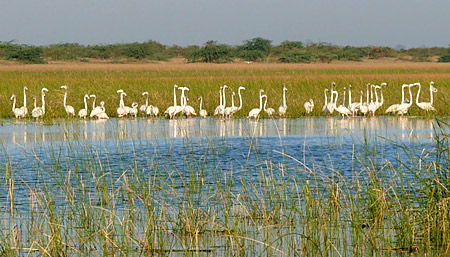
The Phoenicopterus ruber (greater flamingo) represents a special case, inasmuch as this species has colonised the reserve in great numbers over recent years. Flamingos began to settle in the shallower, saltiest ponds in the early 1990s, managing to breed within the salt works for the first time in 1996. The number of individuals has thus continued to climb, until reaching around 7,500 today, making it the largest concentration of the species in mainland Italy. These birds have therefore become a stable presence in the protected area, where their food abounds, primarily in the form of the crustacean Artemia salina, the only invertebrate that can live in water with salinity of over 300%, to which they owe their pink colouring. In reason of the above, we would like to organize an event in Miami, that will take place in September and October 2011 at the Freedom Tower Miami Dade College to present Italy, Puglia and Margherita di Savoia. In one of the tower areas we will present: ITALY in Your Backyard – “Apulia Region "
THE PROJECT
Still little known in the US, the region of Puglia in Italy offers great beauty, art and history. Italy in Your Backyard, Puglia Region is an intriguing and unique educational and cultural experience that uses modern technology and virtual reconstruction. The exhibition is suitable for all audiences and has been received with great enthusiasm by the Art Gallery System of Miami Dade College, which intends to host the exhibition during the fourth quarter of 2011.
THE CONCEPT
The exhibition will take place in an exhibition hall at MDC, whose size and characteristics are suitable for a virtual journey into the region of Puglia, Italy. The visitor arrives in Puglia through a portal that identifies its geographic location and then is slowly surrounded by the landscapes, scenery, images and sounds of the region. Puglia will be recreated through alternating projections of real landscapes and images - on screens made of a special translucent material. All projections will feature Dolby Digital sonic atmospheres that surround the visitor with the sounds of Puglia. The path will continue through a corridor - the Art and History of Puglia - where visitors can retrace, chronologically, the various artistic and historical eras that characterize the culture of Puglia. Projections of descriptive text will accompany visitors on the historic route. The path through time ends with Puglia today. Visitors will have the feeling of being magically transported to Puglia, surrounded by the images, sounds, and voices of Puglia. They may visit a square or a market, attend a procession, or even participate in a “Pizzica,” a unique folk dance typical to the Salento territory, with music that vibrates as if they were just a few feet from the stage. The clever sequence of images and sounds offers an enticing and innovative way to discover the true beauty and art of Puglia, making every visitor to the exhibition a tourist. We will recreate, of course the landscape and scenery of Margherita di Savoia, with the reproduction of the salt work and the pink flamingos, 20 fibreglass statues made by some fine American artists.
Offers
Who is online
We have 49 guests and 0 users online.
the greater flamingos
-
 The flamingos belong to one of the oldest Order...
 -
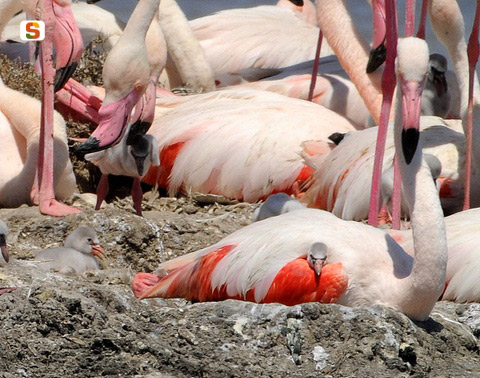 Flamingos only nidificate in rather big colonie...
 -
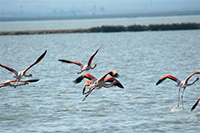 The greater flamingos chiefly occur in lagoons ...
 -
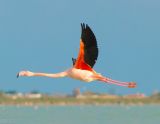 The colour of the feathers of flamingos is due ...
 -
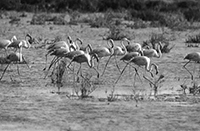 The diet of flamingos is mainly made up of aqua...
 -
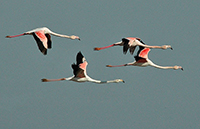 Flamingos are no doubt more famous for their be...
 -
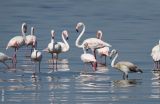 Men have always thought of flamingos as somethi...
 -
 But the most serious threat to the flamingo is ...
 -
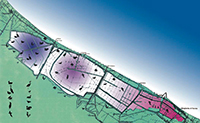 In 1977 the salt-pans of Margherita di Savoia b...
The Wetland
-
In the flat heart of Daunia, on the border between the provinces of Foggia an...
-
 The Ramsar Convention (The Convention on Wetlands of International Importance...
 -
 In Apulia wetlands, vegetation has needed to adapt itself to the peculiar env...
 -
 Apulia offers some of the most significant examples of coastal wetlands. Part...
 -
 Wetlands are those natural or artificial areas with presence of water, whethe...
The City
-
 from the book 'Paese Mio' by Emanuele A...
 -
 sono terreni nati a seguito della bonifica dell...
 -
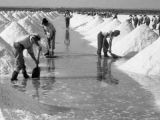 The return of the inhabitants to the original t...
 -
 main numbers of general interest
 -
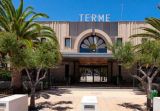 Margherita di Savoia Spa stands on a vast area ...
 -
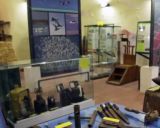 Located in Margherita di Savoia in Corso Vittor...
 -
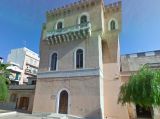 Seat of the municipal art gallery
 -
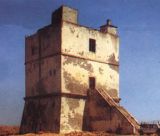 going north of Margherita di Savoia, on the mai...
The Saltpan
-
 The saltpan stretches on a strip of land approximately 20...
 -
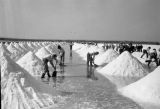 La storia di Margherita di Savoia vive da sempre in perfe...
 -
 Le paludi sono ambienti di notevole interesse naturalisti...
 -
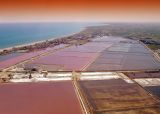 In ancient times here was Lake Salpi, a coastal basin wit...
 -
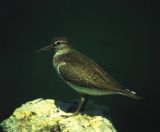 la fauna è spiccatamente ornitica, anche se non è da tras...