



 0883.656676
Different theories exist about the origins of Andria. In 915 it is mentioned as a "casale" ("hamlet") depending from Trani;
it acquired the status of city around 1046, when the Norman count Peter enlarged and fortified the settlements in the area (including also Barletta, Corato and Bisceglie).
In 14th century, under the Angevins, Andria became seat of a Duchy. In 1350 it was besieged by German and Lombard mercenaries of the Hungarian army, and in 1370 by the troops of Queen Joan I of Naples. In 1431 the ruler of Andria Francesco II Del Balzo found the mortal remains of Saint Richard of Andria, the current patron saint, and instituted the Fair of Andria (23–30 April). In 1487 the city was acquired by the Aragonese, the Duchy passing to the future King Frederick IV of Naples. Later (1552), it was sold by the Spanish to Fabrizio Carafa, for the sum of 100,000 ducats.
The Carafas ruled the city until 1799, when the French troops captured it after a long siege. After the Bourbon restoration, Andria was a protagonist of the Risorgimento and, after the unification of Italy, the brigandage era.
Andria was a favorite residence of Emperor Frederick II, who built nearby the imposing 13th century Castel del Monte, one of the most famous Italian castles that was named a World Heritage Site by UNESCO in 1996.
Other attractions include:
- The 12th-century cathedral, which has an 7th-century crypt.
- The Ducal Palace, a fortified residence renovated in the 16th century.
- The church of San Domenico (14th century, largely renovated in the following centuries). It contains a bust of Duke Francesco II Del Balzo attributed to Francesco Laurana, and a 16th century wooden sculpture of the Madonna with Child.
- The church of Sant'Agostino, built in the 13th century by the Teutonic Knights, who originally dedicated it to one of their patrons, Saint Leonard.
- The church was later handed over to the Benedictines, and rebuilt by the Augustinians after the sieges of 1350.
- The main points of interests are the Gothic-style gates, with precious reliefs and crests of the Del Balzo and Anjou families, as well as the Teutonic eagles.
- The church of St. Francis with its cloister (12th century).
- The Communal Palace.
- The Sanctuary of Santa Maria dei Miracoli (16th century), 2 km from Andria, housing a venerated Byzantine icon from the 9th-10th centuries. The basilica is on three different levels.
- The lower, and most ancient, comprises a hall with a nave and two aisles, with decoration showing stories from Genesis. The middle level (Tempietto) has three arcades in polychrome marbles, and is home to the Byzantine icon.
- The upper level, the 18th century basilica designed by Cosimo Fanzago, is preceded by another church, dedicated to the Holy Crucifix and decorated with frescoes depicting the Passion of Christ.
- The church of the Holy Cross (9th century). It has a nave and two aisles, separated by four pilasters.
- The crypt was dug in a tuff rock and includes some natural grottoes.
- The church of Santa Maria di Porta Santa (13th century).
apartament
Bed and Breakfast
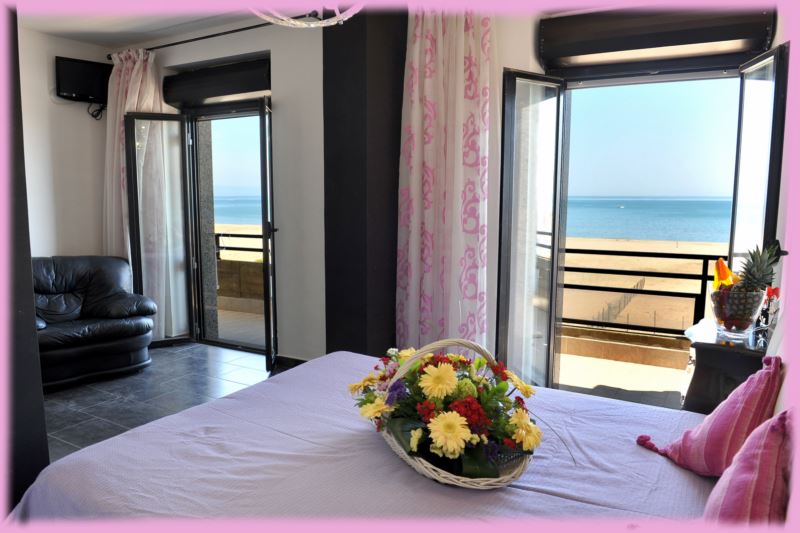
Offers
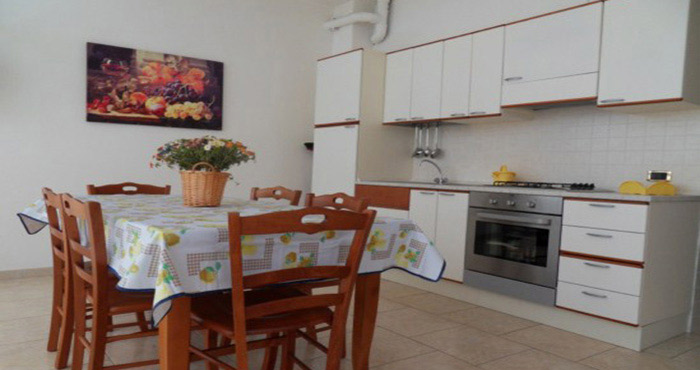
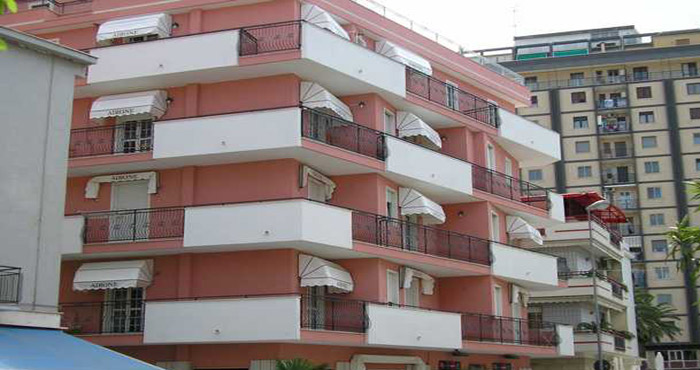

Torquemada
B&B - Ristorante
-

Mobydick
sosta camper
-

Regina Camere
Bed and Breakfast
Who is online
We have 31 guests and 0 users online.
the greater flamingos
-
 The flamingos belong to one of the oldest Order...
 -
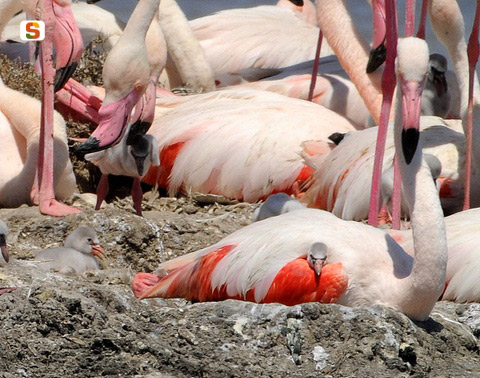 Flamingos only nidificate in rather big colonie...
 -
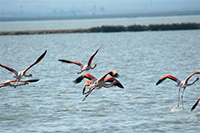 The greater flamingos chiefly occur in lagoons ...
 -
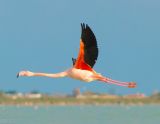 The colour of the feathers of flamingos is due ...
 -
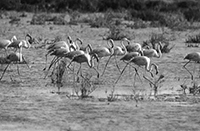 The diet of flamingos is mainly made up of aqua...
 -
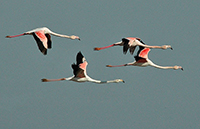 Flamingos are no doubt more famous for their be...
 -
 Men have always thought of flamingos as somethi...
 -
 But the most serious threat to the flamingo is ...
 -
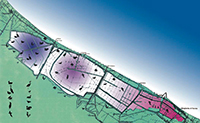 In 1977 the salt-pans of Margherita di Savoia b...
The Wetland
-
In the flat heart of Daunia, on the border between the provinces of Foggia an...
-
 The Ramsar Convention (The Convention on Wetlands of International Importance...
 -
 In Apulia wetlands, vegetation has needed to adapt itself to the peculiar env...
 -
 Apulia offers some of the most significant examples of coastal wetlands. Part...
 -
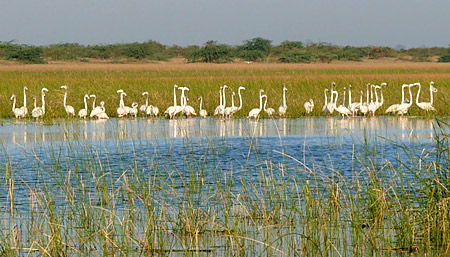 Wetlands are those natural or artificial areas with presence of water, whethe...
The City
-
 from the book 'Paese Mio' by Emanuele A...
 -
 sono terreni nati a seguito della bonifica dell...
 -
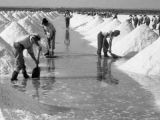 The return of the inhabitants to the original t...
 -
 main numbers of general interest
 -
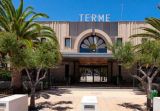 Margherita di Savoia Spa stands on a vast area ...
 -
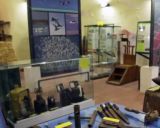 Located in Margherita di Savoia in Corso Vittor...
 -
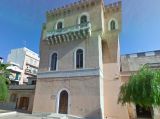 Seat of the municipal art gallery
 -
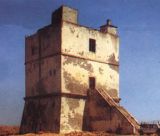 going north of Margherita di Savoia, on the mai...
The Saltpan
-
 The saltpan stretches on a strip of land approximately 20...
 -
 La storia di Margherita di Savoia vive da sempre in perfe...
 -
 Le paludi sono ambienti di notevole interesse naturalisti...
 -
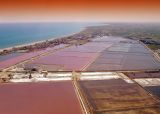 In ancient times here was Lake Salpi, a coastal basin wit...
 -
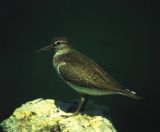 la fauna è spiccatamente ornitica, anche se non è da tras...