



 0883.656676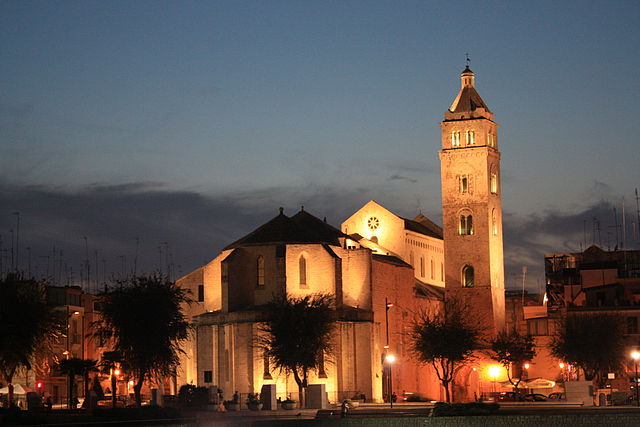
It is famous for the Colossus of Barletta, a bronze statue, representing a Roman Emperor (perhaps Theodosius II).
In 1503 it was the location of the disfida di Barletta ("Joust of Barletta"), a battle during which 13 Italian knights commanded by Ettore Fieramosca challenged and defeated an equal number of French knights who were at the time prisoners of war, in a joust held near Andria.
The city at the time was fairly loosely besieged by French forces, and occupied by a Spanish army under the command of Gonzalo de Cordoba the 'Gran Capitan'. It is the location of the archaeological site of the town of Canne della Battaglia (in Latin Cannae). It flourished in the Roman period and then after a series of debilitating Saracen attacks, was finally destroyed by the Normans and then abandoned in the early Middle Ages.
It is also near the location of the battlefield of the famous battle between Romans and the Carthaginians led by Hannibal. The city has one gold medal for military valour and another one for the civil valour, for its relatively feeble resistance to an incursion of German Fallschirmjaeger who destroyed the port in order to prevent its falling intact into the hands of the advancing British Eighth Army during World War II.
Hystory
Barletta developed long before the Roman era, known by Greeks and Romans respectively as Bardulos or Barulum, its origin dates back one hundred years before the arrival of either in the region, as demonstrated by the finding of an Apulian settlement (4th century BC) and the derivation of its name 'Baal-El' from Phoenician. Phoenicians first established a trading post and staging post for their trade with the local tribes, and the Etruscans farther north. Here initially there was among other trade goods, the import of the until then unknown wine, and later after the area had proved a fertile location for its cultivation, for its cultivation, its export.
So successful was this introduction that the area became known to the Phoenicians as the 'Land of Wine' a name that the Greeks eventually translated as Oenotria. Detail of the façade of the Cathedral of Barletta. In the Middle Ages it was a stronghold of the Normans and Lombards, becoming an important staging post for the Crusaders and the Teutonic Knights and Templars as well as the Knights of St.John. Following the Muslim conquest in the Holy Land, the Archbishops of Nazareth took refuge in Barletta (permanently in 1327).
After immigration from the nearby Canne increased its population due to the destruction of Cannae by the Normans, Barletta lived its periods of greatest splendour under emperor Frederick II and then subsequently the Angevin kings of Naples. At the beginning of the 16th century, during the guerilla war between the French and the Spanish over possession of Southern Italy, the city was the theater of a historical victory of Italian knights over French prisoners, in what became known as the Challenge of Barletta (13 February 1503).
This took place during the occupation of the city by Gonzalo de Cordoba, and served as a handy diversion for his restive siege-bound army. Later the city served as a fortress for the Spanish rulers of southern Italy. In 1528 it was sacked by French troops under Odet de Foix. The city was the capital of its district and the seat of the lower prefecture for the 120 years between 1806 and 1927 and sided with the French under Joachim Murat during the Napoleonic War.
During and after the Unification, Barletta was as poor as was most of the South of Italy. Consequently hygiene and health were particularly bad. Various types of diseases plagued the population, such as tuberculosis, diarrhea, pneumonia, small pox, malaria, etc. An estimated 15% of the population was affected by trachoma. The most dreaded of the diseases brought by poverty was cholera. Outbreaks of cholera took place in the city in 1836, 1854, 1865, 1866, 1867, 1886 and finally 1910 when the bacillus was brought back to Barletta by Barlettan fishermen, and killed tens of thousands all over southern Italy.
During World War II, the city was the site of the first episode of Italian conflict with German troops, when a battalion of Fallschirmjaeger (parachutists) was sent from Foggia to Barletta to destroy the port before the British 8th Army could arrive, the Italian garrison surrendered after a brief struggle, thereby earning the Gold Medal of Military Valour and of Civilian Merit. After the war it was the site of a DP camp.
It was commanded by the eponymous Major James Bond, who was successful in preventing many illegal emmigrants reaching the Palestine Mandate.

Offers
Who is online
We have 48 guests and 0 users online.
the greater flamingos
-
 The flamingos belong to one of the oldest Order...
 -
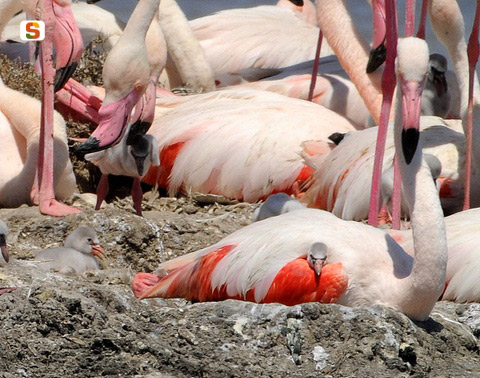 Flamingos only nidificate in rather big colonie...
 -
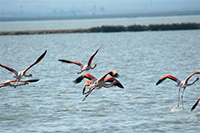 The greater flamingos chiefly occur in lagoons ...
 -
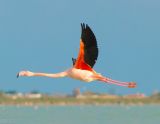 The colour of the feathers of flamingos is due ...
 -
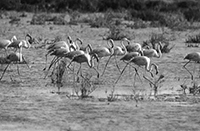 The diet of flamingos is mainly made up of aqua...
 -
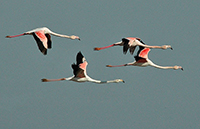 Flamingos are no doubt more famous for their be...
 -
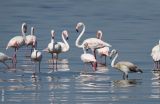 Men have always thought of flamingos as somethi...
 -
 But the most serious threat to the flamingo is ...
 -
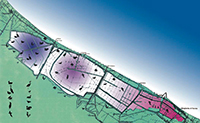 In 1977 the salt-pans of Margherita di Savoia b...
The Wetland
-
In the flat heart of Daunia, on the border between the provinces of Foggia an...
-
 The Ramsar Convention (The Convention on Wetlands of International Importance...
 -
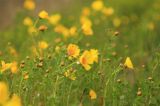 In Apulia wetlands, vegetation has needed to adapt itself to the peculiar env...
 -
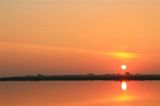 Apulia offers some of the most significant examples of coastal wetlands. Part...
 -
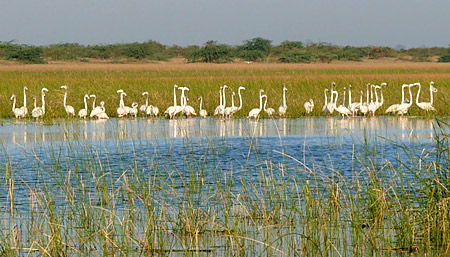 Wetlands are those natural or artificial areas with presence of water, whethe...
The City
-
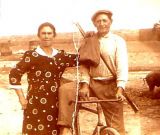 from the book 'Paese Mio' by Emanuele A...
 -
 sono terreni nati a seguito della bonifica dell...
 -
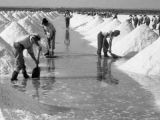 The return of the inhabitants to the original t...
 -
 main numbers of general interest
 -
 Margherita di Savoia Spa stands on a vast area ...
 -
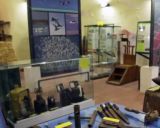 Located in Margherita di Savoia in Corso Vittor...
 -
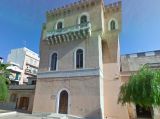 Seat of the municipal art gallery
 -
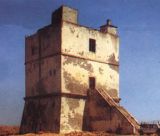 going north of Margherita di Savoia, on the mai...
The Saltpan
-
 The saltpan stretches on a strip of land approximately 20...
 -
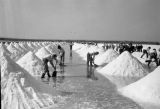 La storia di Margherita di Savoia vive da sempre in perfe...
 -
 Le paludi sono ambienti di notevole interesse naturalisti...
 -
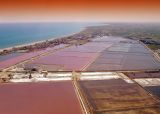 In ancient times here was Lake Salpi, a coastal basin wit...
 -
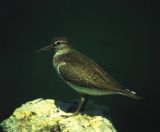 la fauna è spiccatamente ornitica, anche se non è da tras...